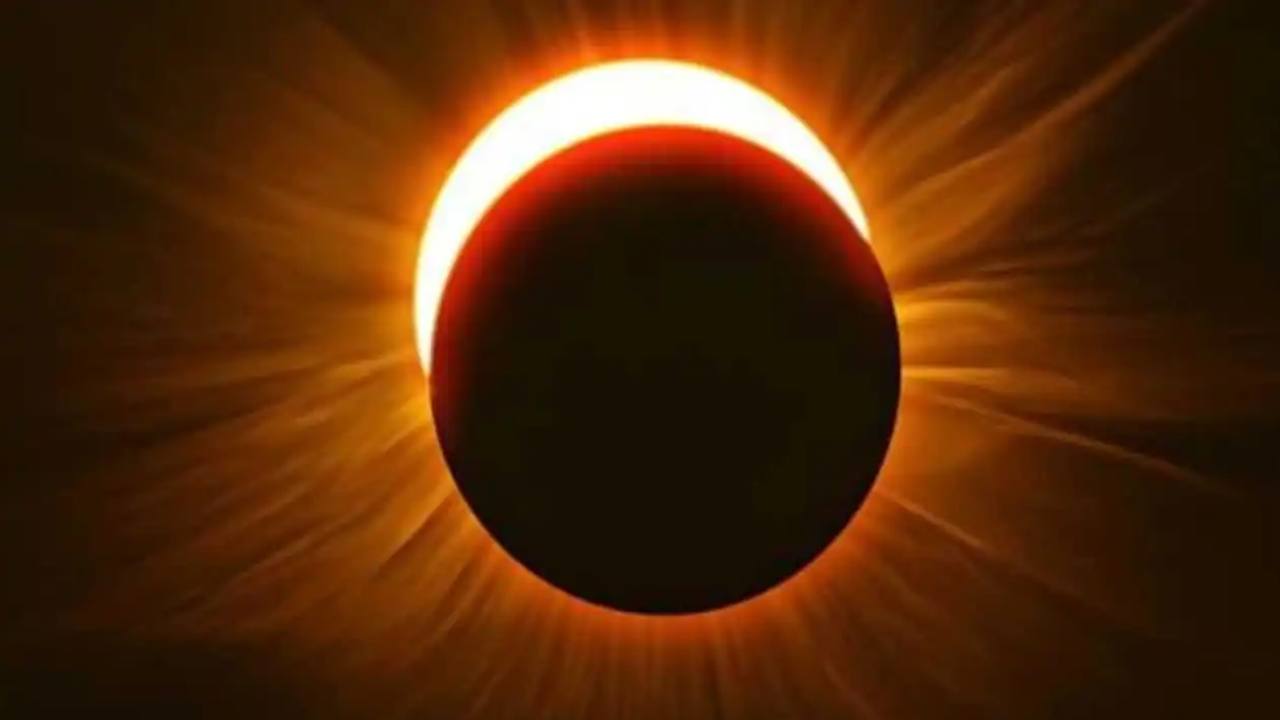

Solar Eclipse 2026 will witness two major celestial events that will attract global attention from astronomers, researchers and skywatchers. In 2026, there will be two Surya Grahan, one annular solar eclipse and one total solar eclipse. Although these eclipses will not be visible from India, they remain extremely important from scientific, spiritual and global astronomical perspectives.
If you are searching for Surya Grahan 2026 dates, timings, type of eclipse and visibility details, here is a complete and reliable explanation written in an Indian-friendly and easy-to-understand format.
How Many Solar Eclipses Will Occur in 2026?
As per astronomical calculations and traditional Panchang references, two solar eclipses will occur in 2026. Both eclipses will take place on Amavasya Tithi, which is traditionally associated with solar eclipses.
Solar Eclipse 2026 Dates
The confirmed dates of solar eclipses in 2026 are:
- First Solar Eclipse: February 17, 2026
- Second Solar Eclipse: August 12, 2026
Quick Information Table: Solar Eclipse 2026
| Topic | Details |
|---|---|
| Event | Solar Eclipse 2026 |
| Total Number | 2 |
| First Eclipse Date | 17 February 2026 |
| Second Eclipse Date | 12 August 2026 |
| First Eclipse Type | Annular Solar Eclipse |
| Second Eclipse Type | Total Solar Eclipse |
| Visible from India | No |
First Solar Eclipse 2026: February 17 Details
The first Surya Grahan of 2026 will occur on February 17, 2026, during the Krishna Paksha Amavasya of the Phalguna month.
Timings of the First Solar Eclipse
- Eclipse Begins: 3:26 PM
- Eclipse Ends: 7:57 PM
This eclipse will be an annular solar eclipse, often referred to as the Ring of Fire eclipse, where the Sun appears as a bright ring around the Moon.
Visibility Regions
This annular solar eclipse will be visible from:
- Zambia
- Zimbabwe
- Mozambique
- Southern parts of South Africa
- Mauritius
- Namibia
- Chile
- Argentina
This eclipse will not be visible from India.
Second Solar Eclipse 2026: August 12 Details
The second Surya Grahan of 2026 will take place on August 12, 2026, extending into the early hours of August 13.
Timings of the Second Solar Eclipse
- Eclipse Begins: 9:04 PM (August 12)
- Eclipse Ends: 4:25 AM (August 13)
This will be a total solar eclipse, one of the most dramatic astronomical events.
Visibility Regions
The total solar eclipse will be visible from:
- Parts of Europe
- Canada
- Northeastern Russia
- Greenland
- Iceland
- Arctic regions
- Northern Spain
- Portugal
- France
- United Kingdom
- Atlantic Ocean regions
- Northwestern parts of Africa
This eclipse will also not be visible from India.
What Causes a Solar Eclipse?
A solar eclipse occurs when the Moon comes between the Sun and the Earth, blocking sunlight either partially or completely. As a result, the Moon’s shadow falls on the Earth, making the Sun appear partially or fully obscured. Depending on alignment and distance, the eclipse can be partial, annular or total.
Precautions to Follow During Solar Eclipse 2026
According to both scientific and traditional beliefs, certain precautions are advised during a solar eclipse:
- Never look directly at the Sun during an eclipse
- Avoid heavy meals during the eclipse period
- Maintain mental calmness and avoid stress or conflict
- Chanting mantras and meditation are considered beneficial
- Avoid cutting hair or nails during the eclipse
- Store cooked food with tulsi leaves
Special Advisory for Pregnant Women
Traditional beliefs advise pregnant women to take extra precautions during a solar eclipse:
- Stay indoors throughout the eclipse
- Avoid sharp tools like knives or scissors
- Do not cook or eat during the eclipse
- Avoid watching the eclipse on screens
- Avoid heavy physical activity
How to Watch Solar Eclipse Safely
Solar eclipses should never be viewed with naked eyes. Direct exposure can cause permanent retinal damage.
To watch safely:
- Use certified solar eclipse glasses
- Use solar filters with telescopes or cameras
- Avoid uncertified glasses or homemade filters
Spiritual Significance of Solar Eclipse
Beyond science, solar eclipses have deep spiritual importance in Indian tradition. They are believed to influence mental energy, nature and spiritual awareness. Practices like meditation, mantra chanting and self-reflection during an eclipse are considered spiritually rewarding.
With one annular and one total solar eclipse, Solar Eclipse 2026 remains an important year for astronomy enthusiasts and spiritual seekers alike, even though the events will not be visible from India.