
Makar Sankranti in 2026 will be observed in mid-January, in keeping with the Hindu solar calendar, when the Sun enters Capricorn. Devotees across India traditionally follow the festival based on the date and the exact time of the solar transition, as religious rituals are performed only after this moment.
The festival marks the beginning of Uttarayan, a spiritually significant phase, and is associated with charity, river bathing and seasonal change. The timing of Makar Sankranti 2026 is particularly important for calculating Punya Kaal and Maha Punya Kaal, which guide prayers and donations on the day. Every year, devotees observe the festival with rituals, charity and traditional food, while many also associate it with sacred events like river bathing and the Kumbh Mela.
Makar Sankranti 2026 Date
According to the Hindu Panchang, Makar Sankranti in 2026 will be observed on Wednesday, January 14. The festival follows the solar calendar, which is why it usually falls on the same date each year. In the Bengali calendar, the day corresponds to 29 Poush, 1432 and is celebrated as Poush Parbon.
Makar Sankranti 2026 Time and Auspicious Period
The exact Makar Sankranti 2026 time is calculated based on the Sun’s entry into Makara Rashi (Capricorn). In 2026, this transition will occur at 2:49 PM. Religious rituals, prayers and charitable activities are traditionally performed after this time. The Punya Kaal will remain effective from 2:49 PM to 5:42 PM, while the Maha Punya Kaal, considered the most auspicious period, will be from 2:49 PM to 3:42 PM.
Makar Sankranti 2026: Key Details
| Aspect | Details |
|---|---|
| Festival Name | Makar Sankranti |
| Date | 14 January 2026 |
| Day | Wednesday |
| Sankranti Time | 2:49 PM |
| Punya Kaal | 2:49 PM – 5:42 PM |
| Maha Punya Kaal | 2:49 PM – 3:42 PM |
| Bengali Date | 29 Poush, 1432 |
| Special Traditions | Til–gur sweets, pitha, khichdi |
Religious and Seasonal Significance
Makar Sankranti marks the end of Dakshinayan and the beginning of Uttarayan, the phase when the Sun starts its northward journey. From this day onward, daylight hours gradually increase while nights become shorter. The festival also signals the start of the main harvest season, making it especially important for agricultural communities.
Astrological Importance
From an astrological perspective, Makar Sankranti is significant because the Sun enters Capricorn, a zodiac sign ruled by Lord Shani (Saturn). This solar transition is considered powerful, though the day is generally not recommended for auspicious beginnings such as marriages, griha pravesh or starting new businesses.
Connection Between Makar Sankranti and Kumbh Mela
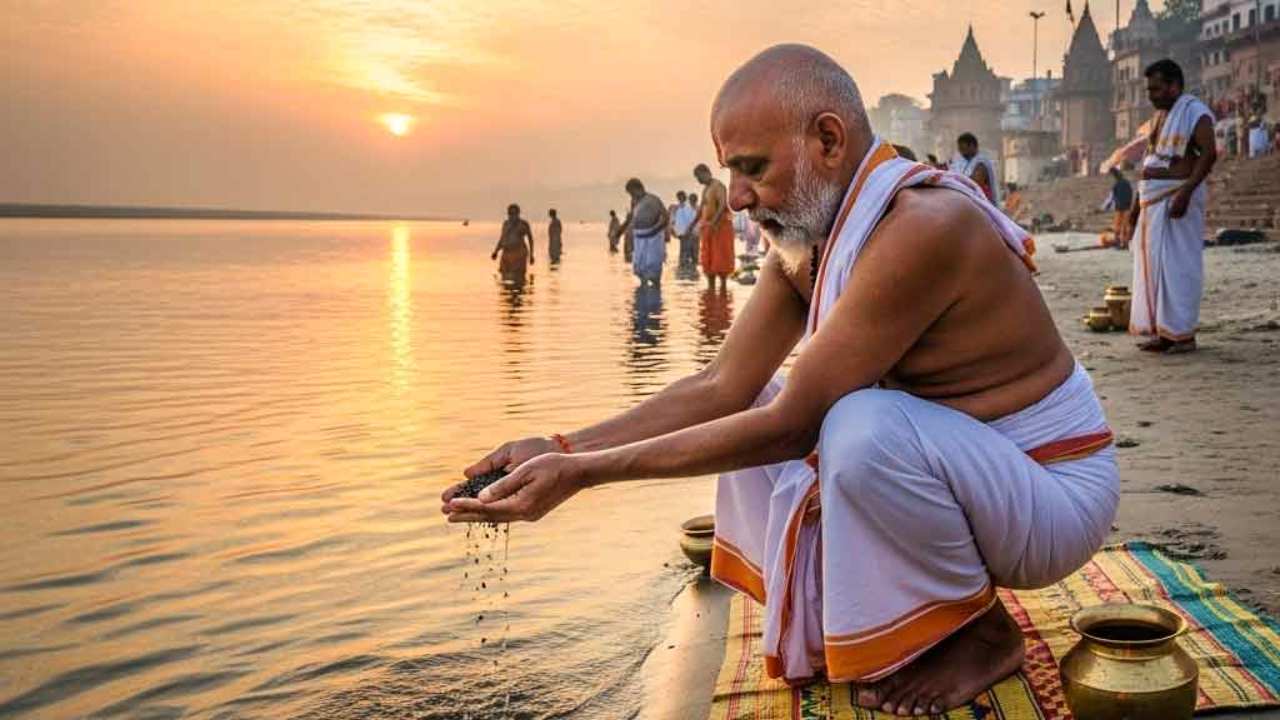
Makar Sankranti has a strong association with the Kumbh Mela. During Kumbh years, the festival is observed as one of the most important Shahi Snan days. Devotees believe that taking a holy dip in sacred rivers such as the Ganga, Yamuna or Godavari on Makar Sankranti brings spiritual purification and divine blessings. Saints, akharas and pilgrims attach special significance to this day.
Rituals and Religious Practices
On Makar Sankranti, devotees clean their homes, take a holy bath and offer prayers to Surya Dev. Charity is a central part of the observance, and donating food, clothes, sesame seeds and jaggery is considered highly auspicious. Many also believe that holy river baths on this day help wash away sins and bring prosperity.
Food Traditions and Festive Dishes
Food plays an important role in Makar Sankranti celebrations. Across India, sweets made from sesame seeds and jaggery are prepared and shared. In West Bengal, different varieties of pitha and payesh are made, while khichdi is popular in Bihar and Uttar Pradesh. In Tamil Nadu, the festival is celebrated as Pongal, with special rice dishes offered to the Sun God.
Regional Names and Celebrations
Makar Sankranti is celebrated under different names across India. In West Bengal, it is known as Poush Parbon; in Tamil Nadu, Pongal; in Assam, Magh Bihu; in Bihar and Uttar Pradesh, Khichdi Parv; in Punjab and Haryana, Lohri; and in Gujarat, it is celebrated as Uttarayan, famous for large-scale kite flying.
Historical and Mythological Background
References to Makar Sankranti are found in ancient Hindu scriptures such as the Mahabharata and various Puranas. According to legend, Bhishma Pitamah chose the period of Uttarayan to leave his mortal body. Other stories connect the festival with Surya Dev’s symbolic meeting with his son Shani Dev and the victory of Goddess Sankranti over the demon Sankarasura.
Makar Sankranti continues to blend astronomy, spirituality, agriculture and regional culture. With its fixed solar date, sacred timing and connection to events like the Kumbh Mela, Makar Sankranti 2026 remains one of the most significant festivals in the Hindu calendar.