
Three Listings, Three Different Stages
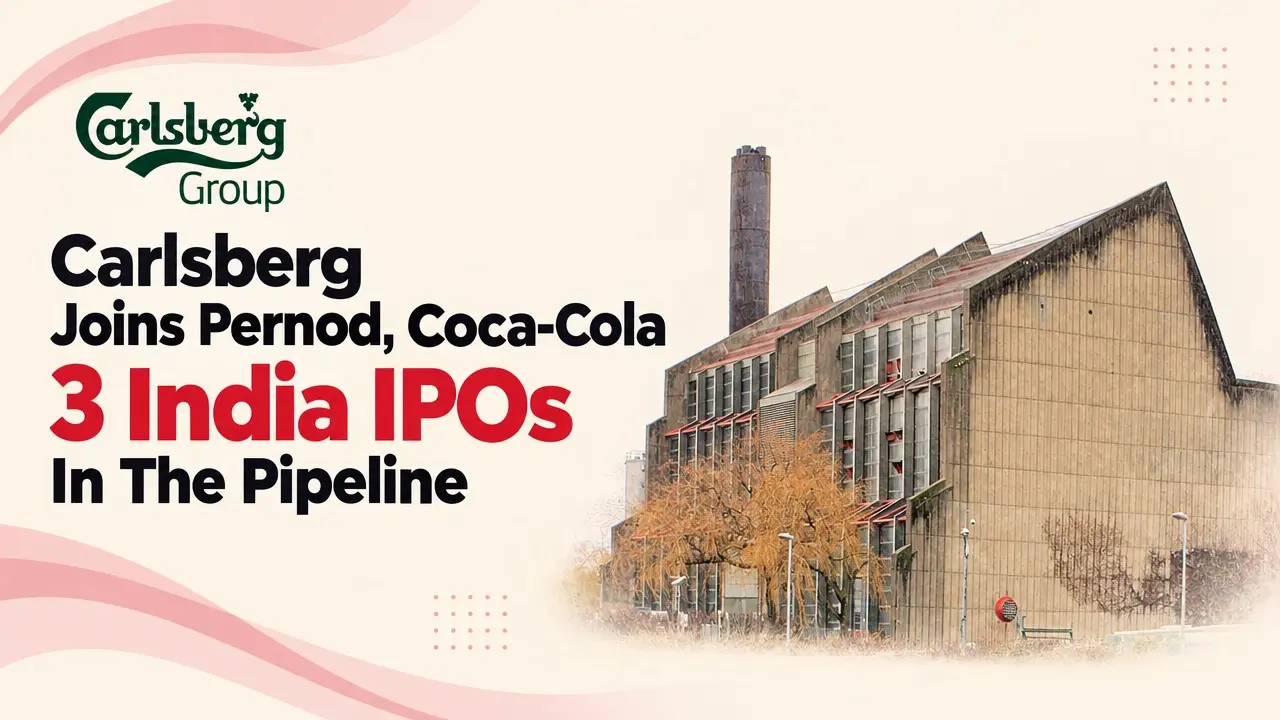
Three of the world’s largest drinks companies used their latest earnings calls to say the same thing in three different tenses. Carlsberg is taking investor meetings, Pernod Ricard is waiting on its board, and Coca-Cola is still studying the idea. All three want a public price for their Indian business.
Carlsberg is the furthest along. Chief financial officer Ulrica Fearn told the third quarter 2026 earnings call that an updated draft red herring prospectus went to the Securities and Exchange Board of India on 28 October, and that the company has moved into what she called follow-on activities, including setting up interactions with potential investors.
Read more on newzshort:
Carlsberg India Files Public IPO Papers For 86.42 Million Shares
Pernod Ricard sits a step behind. Mauve Croizat, its executive vice president for finance and technology, said the board has asked management to keep preparing so the group is ready if a decision is taken in the coming months, while repeating that any listing remains subject to board approval. India grew sales 19 per cent in the September quarter.
Coca-Cola is at the earliest stage of the three. President and chief financial officer John Murphy said the company is exploring a potential initial public offering of its bottling operations in India and will provide updates as appropriate. The vehicle is Hindustan Coca-Cola Holdings, parent of Hindustan Coca-Cola Beverages, the largest Coca-Cola bottler in the country.
Read more on newzshort:
SEBI Clears IPO Papers Of Atomberg, 3 Others
What The Three Businesses Are Worth
The size gap explains the order of the queue. Pernod Ricard India sold Rs 27,445.80 crore worth of liquor in FY25, the largest alcoholic beverage business in the country by value, ahead of Diageo’s United Spirits at Rs 27,276 crore of revenue from operations. Total income was Rs 27,663.56 crore and profit Rs 1,734.59 crore, up 8 per cent.
Carlsberg India is the smaller business but the better recent print on profit. Revenue from operations fell 2.2 per cent to Rs 8,708.8 crore in FY26 while net profit rose 22.1 per cent to Rs 535 crore, ahead of market leader United Breweries at Rs 413 crore. In the June quarter revenue rose 21.5 per cent but profit slipped 3.9 per cent to Rs 158 crore.
Why A Bombay Price Matters More Than The Cheque
Carlsberg’s offer is entirely an offer for sale of 86.42 million shares held by the Danish parent, so not one rupee of the proceeds reaches the Indian breweries. The point is valuation rather than capital. A listed Indian arm hands the parent a public currency, a benchmark for later stake sales and a local shareholder base, which is the same route Hyundai Motor and LG Electronics took.
The price itself is still open. There is no band in the draft papers, so Kotak Mahindra Capital, JPMorgan and Citigroup will build the book, and reports of a $700 million offer against a valuation near Rs 30,000 crore imply a sale of roughly a fifth of the equity. For Pernod, annual sales near Rs 27,400 crore would make it the largest of the three candidates.
The Risks The Calls Did Not Settle
Two risks sit under the optimism. Beer and spirits remain state excise businesses, where one state’s policy, licensing cycle or price revision can move a whole quarter, and Carlsberg’s own papers disclose that Rajasthan’s pollution control board revoked consent for its Alwar brewery, which affects supplies into that market.
Pernod carries a second kind of risk. Growth in India is strong, but expansion has repeatedly run into licensing disputes in Delhi, and a board in Paris has not yet said yes. Coca-Cola’s bottler listing needs its own approvals and friendly market conditions, and the 40 per cent stake that Jubilant Bhartia Group agreed to buy in Hindustan Coca-Cola Holdings for Rs 12,500 crore sets an ownership structure the offer must fit around.
What To Watch
Four dates matter. Carlsberg’s price band and anchor book, Pernod’s board decision, a Coca-Cola filing for its bottler, and the depth of India’s primary market, which absorbed about $14.4 billion of first-time share sales in 2026 after a record $22 billion last year.
The editorial read is that India has become the listing venue of choice for consumer multinationals that once treated the country as a branch office. That is a vote of confidence in demand, and a test of disclosure. A minority shareholder in an Indian beer or cola business will own a company whose pricing, routes to market and margins are set by state excise departments and by a parent abroad. The offer documents, not the earnings call mood, will decide whether that is priced fairly.