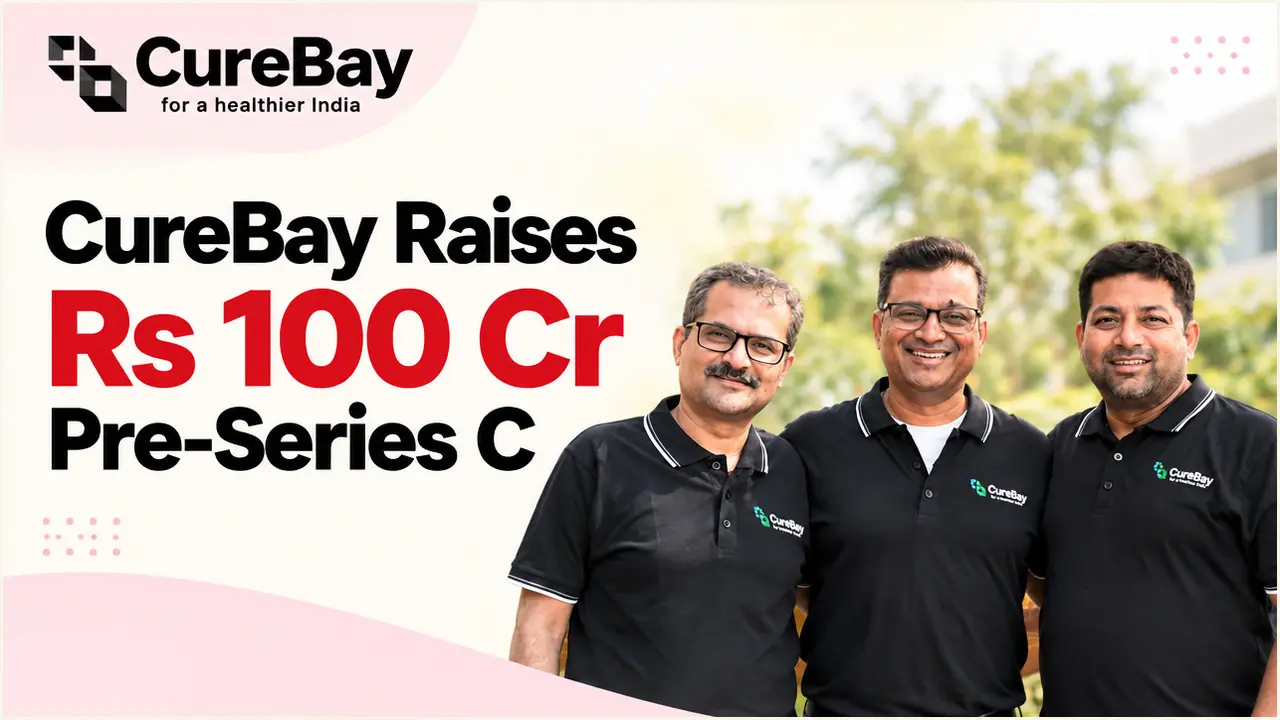

CureBay has raised about Rs 100 crore in a pre-Series C round that mixes equity and debt, as the Bhubaneswar-based healthtech company looks to widen its rural clinic network beyond the four states it runs in today.
The round is split almost 70:30. About Rs 69 crore came in as equity, led by IvyCap Ventures, with existing backers joining. The remaining Rs 30 crore is debt from Trifecta Capital, Alteria Capital and VentureSoul Partners. The company did not disclose a valuation.
The funding, and who is backing CureBay
IvyCap Ventures led the equity cheque, as reported by Inc42 and The Economic Times. Earlier investors, including Elevar Equity, Bertelsmann India Investments and British International Investment, participated. Before this round CureBay had raised more than $34.6 million in equity.
Vikram Gupta, founder and managing partner of IvyCap Ventures, said the mix of technology and an on-ground care network made the model worth backing. The bet is on the field layer: clinics, health workers and a supply chain that reaches small towns.
From 250 clinics to 800, and two new states
CureBay runs more than 250 technology-enabled clinics across seven states, with Odisha, Chhattisgarh, Jharkhand and Bihar as its core markets. Telangana and Andhra Pradesh are next. Management wants 800 clinics within two to three years.
Each clinic is paired with community health workers, called Swasthya Mitras, who guide patients through consultations, tests and medicine collection. The company says it works with about 1,800 Swasthya Mitras, 530 clinical staff, 230 doctor partners and 210 partner hospitals and laboratories, and runs more than 400 health camps a month.
That field layer is also the expensive part. A clinic is a fixed cost paid whether or not patients walk in, and health workers are a per-village cost built before volumes arrive.
Read more: managed care is drawing large cheques too. Even Healthcare raised $50 million in a Series B to build its own hospitals, a different route to the same problem of affordable care.
AI screening, and a subscription bet on prevention
CureBay already uses AI-assisted screening and care coordination. Its products cover skin conditions, dental health and haemoglobin testing, and the company is buying GPUs and training its own models to widen that list. The plan is a proprietary intelligence layer that supports screening, health insights and clinical decisions at the point of care.
The other commercial lever is Kavach, a subscription programme built around preventive care. It bundles consultations with support for medicines, diagnostics and some hospitalisation costs. The money arrives before the patient needs care, which is the closest thing a rural network has to predictable revenue.
“Rural India doesn’t need another app; it needs a system that works end to end, from the Swasthya Mitra at the doorstep to the specialist in the city,” founder and chief executive Priyadarshi Mohapatra said.
What the numbers say
Mohapatra told Inc42 that CureBay closed FY26 with annual recurring revenue of nearly Rs 170 crore and aims to double that in FY27. The monthly run rate is about Rs 20 crore, and he expects it to grow almost 50 percent by March. The company says it broke even at operating EBITDA in FY26 but remains loss-making at the company level, because new markets need fresh spending.
Patient numbers differ by source. Inc42 reports more than 12 lakh patients served across 4,500 pincodes, while The Economic Times puts the figure at 17 lakh. Both are company-reported, and the audited FY26 statements are not filed yet, so revenue and margin figures remain management claims.
Founders and the road so far
CureBay was founded in 2021 and is led by Mohapatra, who has spent most of his career in healthcare and consumer businesses. Its clinics sell consultations, medicines, diagnostics and surgery facilitation, with a digital platform tying those pieces together for patients who often need help navigating the system as much as they need a doctor.
What happens next
Three things are worth tracking. The clinic count against the 800 target, since a clinic that takes a year to reach break-even changes the unit economics. Whether Kavach subscriptions grow faster than one-time consultations. And the ARR line at the close of FY27, against a doubling claim that assumes two new states start paying before they start costing.