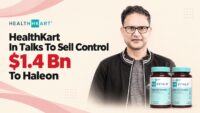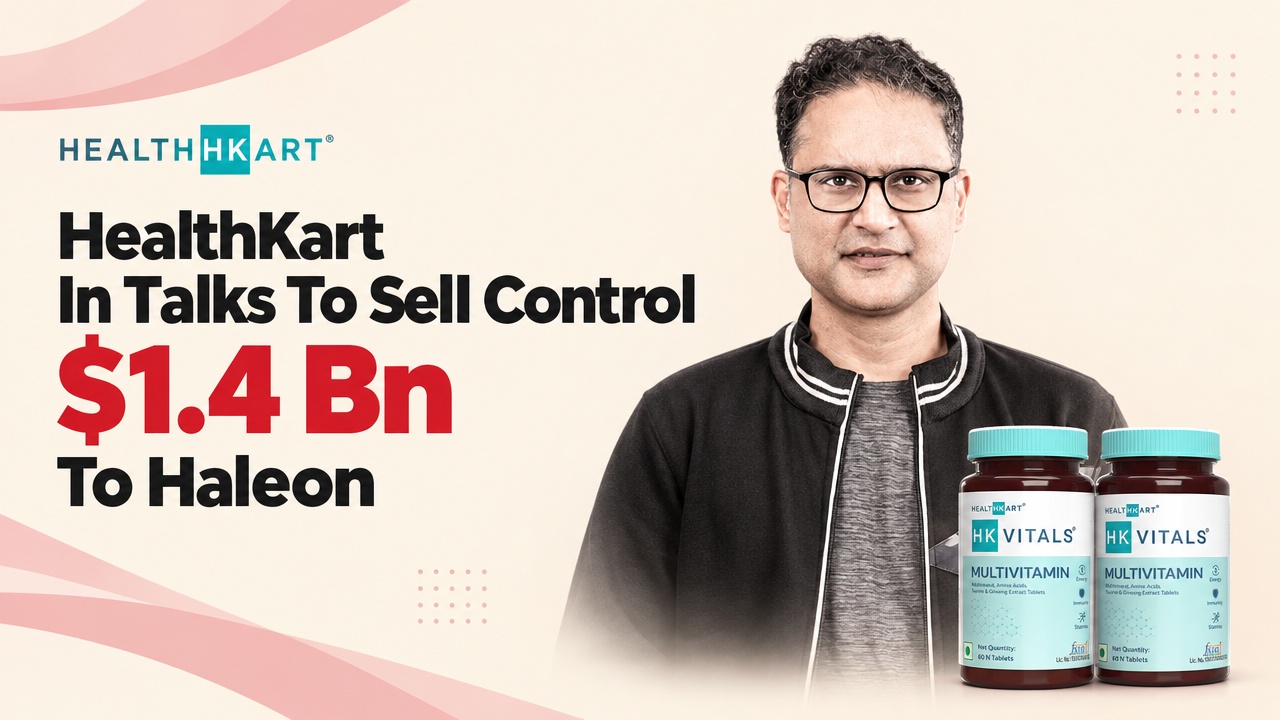

Haleon, the British consumer health group spun out of GSK in 2022, is in early talks to acquire a controlling stake in Indian nutrition and supplements company HealthKart in a deal that could value the Gurugram-based firm at $1.2 billion to $1.4 billion, Livemint reported on Friday, citing three people with knowledge of the discussions.
The transaction, if it closes, would hand Haleon the owner of MuscleBlaze, HK Vitals and Gritzo, and with it a nationwide retail and online network built over fifteen years, while giving HealthKart’s founders and investors a strategic exit ahead of a listing they have been preparing in parallel.
Read more on newzshort:
Tata Steel-APL Apollo Deal Faces SEBI Scrutiny
The Deal On The Table
According to the report, talks have run for a few months and the contours are now being negotiated. Avendus is likely advising HealthKart on the mandate, and a complete sale of the company is also being considered, the people said. Haleon, HealthKart and Avendus did not respond to emailed queries; an Avendus spokesperson declined to comment.
HealthKart is simultaneously working on an initial public offering in India through a dual-track process, the report said, and its choice between a strategic buyer and a listing will turn on the terms and the valuation on offer. That structure leaves the company with two price discovery routes and neither of them binding yet.
Read more on newzshort:
GEF Capital Closes $615 Million Climate Fund For India
The Arithmetic Behind $1.4 Bn
HealthKart’s revenue from operations rose 56.2 per cent to Rs 2,052 crore in FY26 from Rs 1,313 crore a year earlier, and profit before tax climbed 30 per cent, according to Entrackr’s October review of its filings. In FY25 the company’s net profit had roughly tripled to about Rs 120 crore, on revenue that had reached Rs 1,021 crore with a Rs 37 crore profit in FY24.
On our arithmetic, $1.4 billion works out to roughly Rs 12,300 crore at about Rs 88 to the dollar, or close to six times FY26 revenue; the lower end of the range implies about five times. The same company raised $153 million in 2024, co-led by ChrysCapital and Motilal Oswal Alternates, at a valuation of $500 million.
Why Haleon Needs India Nutrition Now
Haleon already sells vitamins, minerals and supplements in India through Centrum, alongside Eno, Sensodyne, Iodex and Otrivin. Buying scale in the category would be quicker than building it, and the company has been explicit about India: it committed about Rs 2,000 crore in June to its first Indian plant, at Pithampur in Madhya Pradesh.
The strategic logic runs against a soft global print. Haleon reported organic revenue growth of 2.6 per cent for the September quarter, missing its own guidance and sending the shares sharply lower, and paired the update with a 500 million pound buyback. It was also among the suitors for Kedaara-backed Universal NutriScience earlier this year, per Moneycontrol.
Consumer Giants Are Buying This Category
The talks fit a pattern that has accelerated through 2026. Hindustan Unilever bought the remaining 49 per cent of OZiva for Rs 824 crore in February, making the plant-based nutrition brand a wholly owned subsidiary, and Marico paid Rs 1,012 crore in October for an additional 24.1 per cent of Plix, taking its holding to 84.1 per cent.
The appeal is distribution: large consumer groups own chemist shelves and modern trade networks that a digital-first brand cannot buy quickly, while the younger company brings formulation, content and a customer list. HealthKart’s own 200-plus stores across more than 90 cities are the physical half of that equation.
The Risks And What To Watch
Nothing is signed. The report describes early discussions, and a strategic sale of this size has to clear due diligence, an agreed valuation and the expectations of a shareholder register that includes Temasek, Sofina, Peak XV, A91 Partners, Kae Capital and Sharrp Ventures. A gap between the $1.4 billion ask and what a buyer will pay is the most likely reason the IPO route survives.
Watch three signals: whether Haleon confirms exclusive talks in a regulatory disclosure, whether HealthKart files its draft red herring prospectus in the current quarter, and whether Haleon’s India leadership says anything about nutrition on its next earnings call. Competition is crowding in too, from Nutrabay, Hyugalife and HealthyHey among others.
The Desk View
Analysis: a controlling stake is the structure to expect first. It lets founder Sameer Maheshwari and the private investors take partial liquidity while the growth is still compounding, and leaves Haleon an option to consolidate later. At five to six times sales the buyer is paying for an expanding category, not a mature brand. If the two sides cannot agree on that multiple, an IPO is the better outcome for HealthKart.