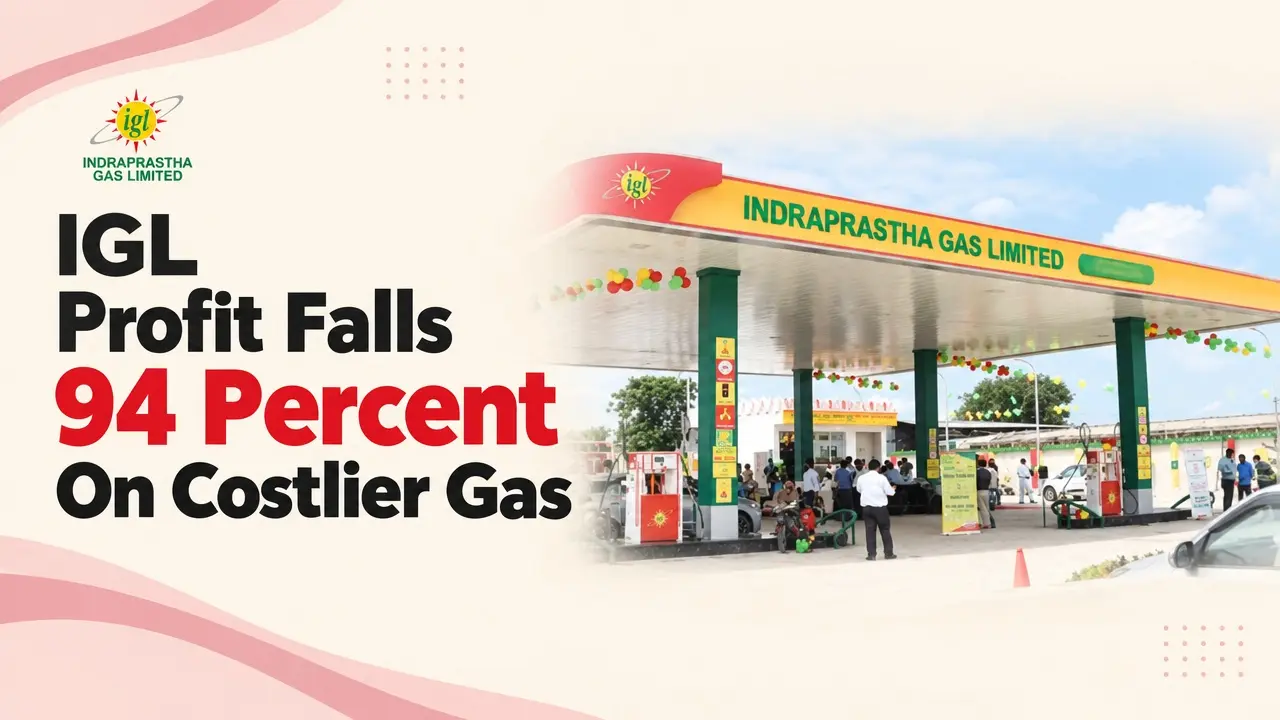

IGL Q2 Results: Profit Down 93.83 Percent
IGL reported consolidated net profit of Rs 23.75 crore for the September quarter, down 93.83 per cent from Rs 384.95 crore a year earlier, even as the Delhi-NCR gas distributor sold a record volume of fuel.
Revenue from operations rose 26.3 per cent to Rs 5,615.38 crore from Rs 4,445.96 crore. Total income climbed to Rs 5,751.39 crore from Rs 4,540.86 crore. The gap between a 26 per cent rise in sales and a 94 per cent fall in profit is the story of the quarter.
Read more on newzshort:
Indian Oil Q2 Profit Jumps 184 Percent To Rs 21,630 Crore
Average daily gas sales crossed the 10 million standard cubic metres per day mark for the first time, touching 10.06 mmscmd against 9.31 mmscmd a year ago. CNG volumes grew 9 per cent and piped natural gas volumes 8 per cent, the company said in its results statement.
Indraprastha Gas operates city gas networks across 34 districts in 11 geographical areas covering Delhi, Uttar Pradesh, Haryana and Rajasthan. Its gas reached more homes and buses than ever before, but the fuel it buys became far more expensive than the price it was able to charge.
Read more on newzshort:
Centre Scraps Petrol Export Duty, Hikes Diesel Levy To Rs 11.50
Why Record Volumes Did Not Lift Profit
City gas distributors buy part of their gas from ONGC at administered prices set by the government well below market rates, and the rest on the spot market. Since 2024 New Delhi has cut that cheaper administered allocation, pushing distributors to buy costlier imported LNG for volumes they once got cheaply.
The September quarter made it worse. Brent crude traded above $108 a barrel as the Iran war disrupted supply, lifting spot LNG and the gas priced off it. IGL raised CNG prices in Delhi by Rs 3.89 a kilogram on 29 August, citing global LNG costs, but that increase covered only part of the quarter that had already passed.
The Arithmetic Behind The Collapse
A fall from Rs 384.95 crore to Rs 23.75 crore is a loss of about Rs 361 crore of quarterly earnings on a volume base that grew 8 per cent. Revenue rose Rs 1,169 crore. Nearly all of that extra turnover went into the cost of gas, which means IGL is now buying growth rather than earning it. Business Standard rounded the same consolidated profit to Rs 24 crore and a 93.5 per cent decline.
Sequentially the drop is steeper. IGL earned Rs 238 crore in the June quarter, itself down 44 per cent year on year, so the September number is roughly 90 per cent lower again. Two consecutive quarters of deterioration rule out a one-off accounting item.
A Sector Squeeze, Not An IGL Problem
The pressure is structural for the whole business. Mahanagar Gas, its Mumbai peer, raised CNG prices by Rs 2 a kilogram on 1 September for the same reason. Every distributor that lost administered gas allocation now carries commodity price risk that its regulated tariff does not automatically pass through to the customer.
IGL still has room to grow. On Saturday it agreed to supply piped gas to 22 Northern Railway establishments across Delhi-NCR, adding an anchor customer outside the retail and transport segments. But such contracts are priced against competing fuels, so they add volume without restoring the old margin.
Risks, What To Watch, And The Read
The stock has already repriced the problem. IGL closed 1.8 per cent lower at Rs 139.15 on Friday, against a 52-week high of Rs 219 and a low of Rs 137.30, down 34.38 per cent over a year and 41.20 per cent over five years. Analysts have also flagged Delhi’s electric vehicle push as a longer-term threat to CNG volumes, which is where the margin is thickest.
Three things decide the next quarter. Whether the government restores administered gas allocation for city gas, whether IGL raises CNG prices again without losing volume to electric buses and scooters, and whether spot LNG stays near current levels once the Iran conflict settles. Volume growth alone will not fix the profit line.
The editorial read is that IGL has quietly changed from a regulated utility with predictable margins into a company that carries commodity risk. Volume records now say less about the business than the spread between gas cost and the pump price. Investors who bought it as a defensive stock should watch margin per unit, not mmscmd.