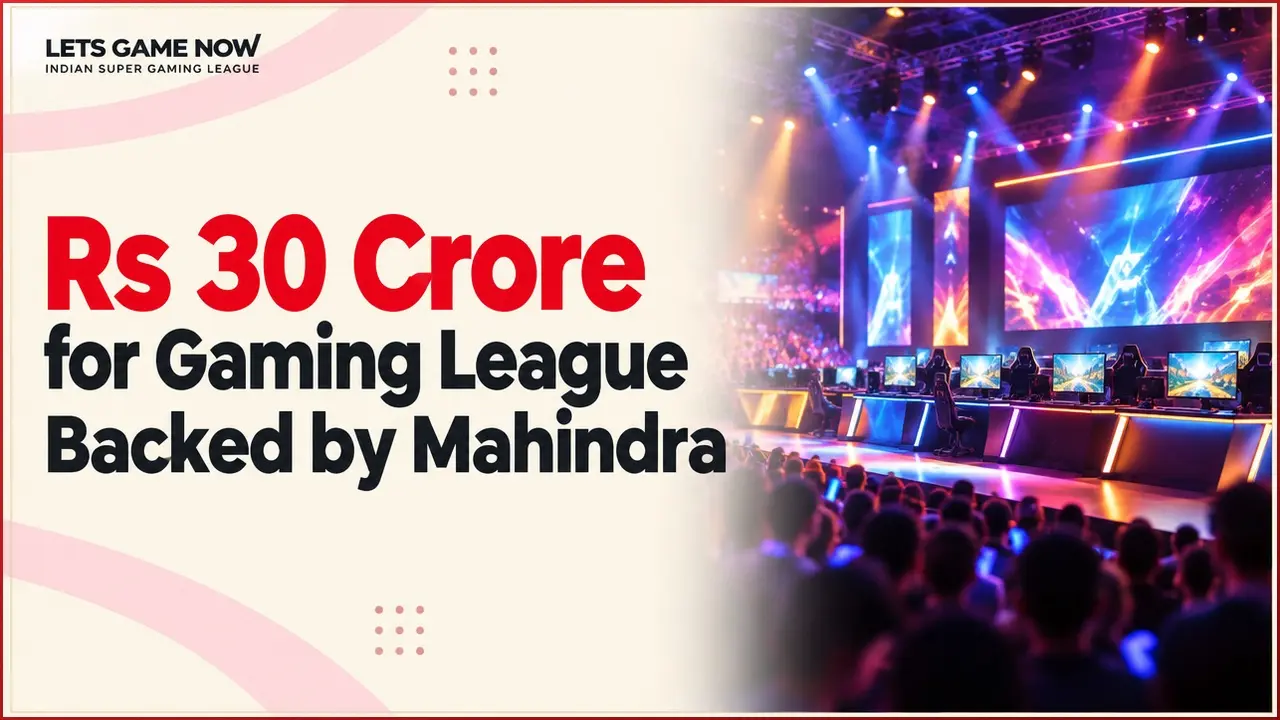

Let’s Game Now, a Bengaluru based esports and gaming platform, has raised Rs 30 crore in a round led by industrialist Anand Mahindra, with Bestvantage Investments and an undisclosed family office from the UAE. The company will put the money into the Indian Super Gaming League, the franchise based competition it has been assembling as its next growth engine.
The round was reported on 30 October by Inc42 and Analytics Insight, the second of which adds that the startup also carries backing from actors Ranveer Singh and Abhishek Bachchan. Founded in 2018 by Santanu Basu, who runs it as chief executive, Let’s Game Now organises online and offline tournaments, sells live broadcast services across South and Southeast Asia, and connects brands with gamers through its own platform at Let’s Game Now.
Read more on newzshort:
Cent Raises $15 Million Series A Led By Blume
The league is the centre of the plan, not a side project. The Indian Super Gaming League is designed as a franchise property with teams, a season format and a paying audience, which is a different business from the project work the company already does. Franchise leagues trade a burst of tournament traffic for repeat viewership, and repeat viewership is what sponsors and broadcasters actually buy.
The company has not disclosed the league’s launch date, how many franchises it will sell, what a franchise will cost or how the property will earn. Those four gaps matter more than the size of the cheque, because they decide whether the league is a format with a revenue model or a tournament with a longer calendar.
Read more on newzshort:
Chapter Home Raises Rs 63 Crore At Rs 1,000 Crore Valuation
The Audience It Is Betting On
Let’s Game Now says it has built a community of more than 14 lakh members and a grassroots network across 400 colleges in 80 cities, reaching over 7 lakh students through 20 plus events and more than 30 college club partnerships. Its wider record includes more than 2,000 events in 18 countries, over 30 brand clients and a claimed reach of 50 million viewers.
That network is the argument for a league. A franchise format needs a predictable supply of players and a base of fans who already follow college and city level competition, and the company is claiming to own both. What it has not shown is whether that audience converts into paying viewers, ticketing or subscription revenue once a season runs for months rather than a weekend.
What Mahindra Brings To The Table
Mahindra’s involvement is not only capital. His sports investments have included associations with the Pro Kabaddi League and a global chess league, both of which had to sell a team based format to Indian audiences that were used to individual competition. That experience, plus entertainment backers who can put celebrity weight behind broadcasts, is the part of this round that a purely financial investor could not have supplied.
The Real Money Gaming Reset
The context is a market rebuilding itself. India banned real money gaming in 2025, removing the revenue stream that had funded much of the sector’s growth, and pushed gaming companies toward esports, tournaments and brand led content. Esports earns less per user than the old format, but it is legal, sponsor friendly and repeatable, which is precisely the profile a league needs.
The market numbers explain the appetite. India’s gaming market is estimated at close to $3.8 billion and is projected to reach $9.2 billion by FY29, with roughly 59.1 crore gamers in the country. Even a thin slice of that audience is a meaningful business, and a franchise league is the most direct way to charge sponsors for access to it.
Analysis: Where The League Could Stall
Analysis: Rs 30 crore is a seed sized cheque for a property that will need production crews, marketing, franchise development and prize money before it earns a rupee from media rights. The usual failure mode for a new league is not a lack of viewers in season one, it is a lack of franchise owners willing to fund season two. Without committed team owners and a broadcast deal, the format stays a company owned tournament with a franchise label.
What To Watch
Four signals will settle it. The first franchise sales and their prices, a broadcast or streaming partner with a season long commitment, the confirmed start date of the first season, and whether the sponsor list survives beyond the launch. For now the round does what an early cheque should: it buys the company time to sell a format that has not yet been tested in front of a paying Indian audience.